POPULATION THEORIES AND MODELS 2026-2027 - SC0000236
Schema della sezione
-
- Are you curious about demographic phenomena and the analytical methods used in Demography?
- Do you fancy trying out a new way of learning and putting yourself to the test?
- Are you tired of memorising concepts, but also want to put your KNOWLEDGE into practice, acquiring SKILLS that are useful for the job market, moving from knowledge to hard and soft skills?
- Would you like to work in groups in class to help you learn and perhaps have fun together, taking part in engaging challenges?
- Would you like to put your English to the test by using it as a real working language?
 Then this is the right course for you!
The POPULATION THEORIES AND MODELS course is delivered using the Team-Based Learning method.
Come along to the first lesson (Tuesday 23 September at 2.30 pm - ROOM SC20) to give it a go!
- It will help you organise your study time more effectively so you don’t end up cramming everything at the last minute: in fact, we’ll alternate a week of independent study with a week of classroom activities! Each lesson will last three academic hours.
- We’ll create a cooperative learning environment, where not only the lecturer, but each of you will help others to learn. And you’ll be amazed at just how useful this is!
- Regular and active attendance will also allow you to earn up to 3 bonus marks towards your final grade
I look forward to meeting you there!
-
-
 Hello! I am Maria Letizia Tanturri - instructor of this course.
I am a Professor of Demography at the Department of Statistical Sciences.
My OFFICE HOUR in the first semester is: Thursday: 11.30-12.30
My office is at the Department of Statistical Sciences, # 161.
Please, always contact me, via e-mail (ml.tanturri@unipd.it ) before coming or to arrange a meeting in a different time or a Zoom meeting.
-
-
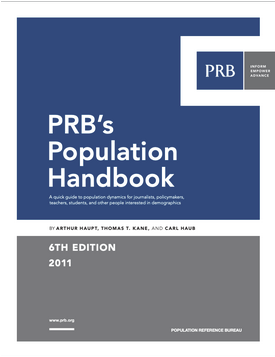 A concise text, useful for quickly acquiring a basic understanding of the subject for those who have never studied demography. Caricato il 20/09/2026 18:05
-
 A concise text, useful for quickly acquiring a basic understanding of the subject for those who have never studied demography. It provides a basic understanding of demography and demographic processes, including fertility, mortality, and migration, and their effects on the world.Caricato il 20/09/2026 18:05
-
HANDBOOK 3 - Preston, Demography
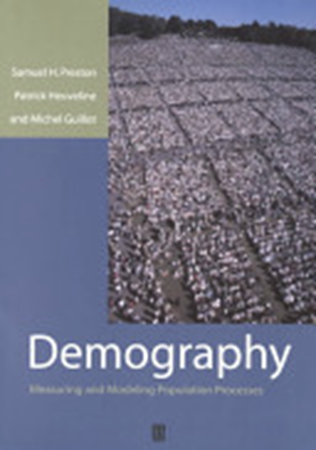 Each week on the Moodle you will find the part that you have to study for the activities of the following week in classroom.
-
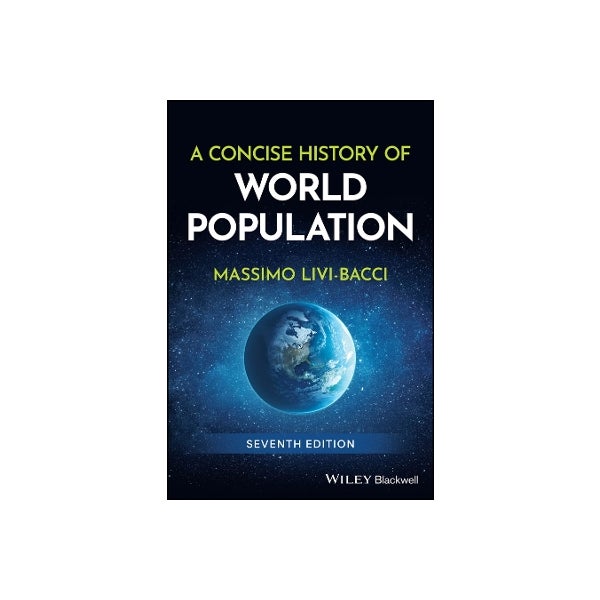
Handbook 4- Livi Bacci, A concise history of the world population, Ch. 4, 5 e 7
Available via library resources in electonic formats. https://onlinelibrary.wiley.com/doi/book/10.1002/9781394295777
-
-
MAIN SOURCES OF DEMOGRAPHIC DATA
WORLD POPULATION DATA
United Nations Population Division: World Population Prospects
Human Mortality Database (HMD)
The world's leading scientific data resource on mortality in developed countries. (Data available by cohort and year)Human Fertility Database
National-level data, comparative across Europe and some non-European countries.Cohort Fertility and Education Database
Very useful for comparing the evolution of fertility rates over time by education level, and for cross-country comparisons.
EUROPEAN POPULATION DATA
Eurostat Database
- https://ec.europa.eu/eurostat/web/population-demography/demography-population-stock-balance/database
ITALIAN POPULATION DATA
ISTAT Demographic Portal
Data on the Italian population (structure and dynamics) by territorial division, region, province, and municipality; annual and monthly demographic balance; foreign citizens; mortality and fertility tables by year; population forecasts; marriage data, and more.ISTAT Data Portal
Italian data on population and period/cohort fertility indicators at national, regional, and territorial division levels. Also includes data for calculating the probability of childbearing progression and the proportion of women by number of children.
DEMOGRAPHIC MICRODATA
IPUMS International
Dedicated to collecting and distributing census data from around the world. The project's goals are to collect and preserve data and documentation, harmonize data, and disseminate the harmonized data free of charge.
98 countries – 443 censuses and surveysDHS – Demographic and Health Survey
Program and STATcompiler tool. -
-
-
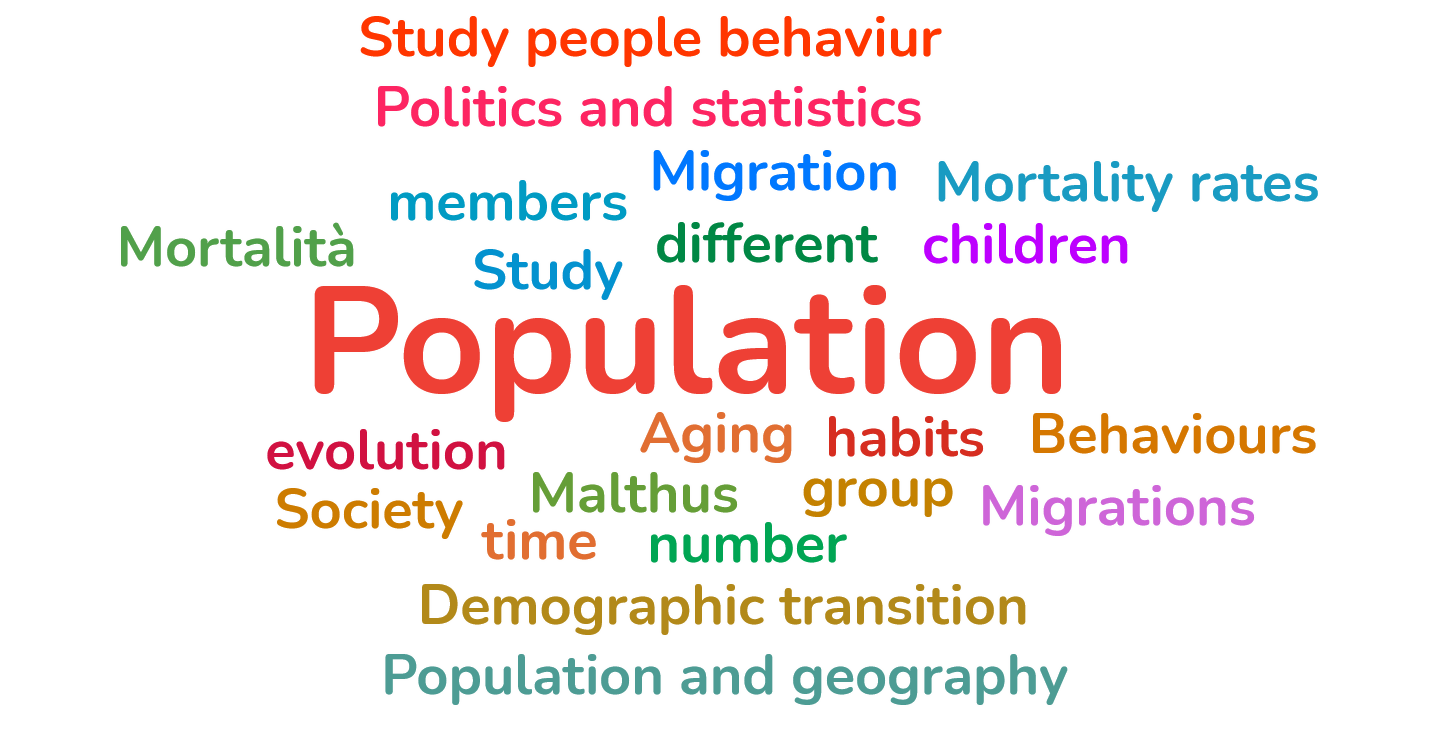
Report on the Wooclap questionnaire to find out about the class’s prior knowledge and interests. Who are we? What would we like to study?
-
-
-
-
-
-
-
Gli studenti devonoSpunta come completato
This article explain what the Team Based Learning method is and how it works. Please read it before the class.
Caricato il 20/09/2026 18:05 -
-
-
Aperto: giovedì, 24 settembre 2026, 14:30Chiuso: giovedì, 24 settembre 2026, 16:30Gli studenti devonoVisualizzare
Here is the first individual quiz: 8 questions in 10 minutes.
You must answer on your own, without consulting the texts.
When the 10 minutes are up, the test will close and be submitted automatically.
For each correct answer: 1 mark.
For each question left blank: 0 marks
For each incorrect answer: -0.1.
But do not worry. This first test will not be graded!!
-
Aperto: giovedì, 24 settembre 2026, 14:40Chiuso: giovedì, 24 settembre 2026, 16:25Gli studenti devonoVisualizzare
Here’s the first group quiz.
After discussing it among you, you must answer as a group and give a single shared answer for the whole group.
If it’s correct, you can move on. If it’s wrong, you can have another go, with your score decreasing with each attempt.
Books and other materials must remain closed this time too!
Good luck!!
-
Aperto: giovedì, 24 settembre 2026, 15:30Chiuso: venerdì, 2 ottobre 2026, 23:59
-
Aperto: martedì, 29 settembre 2026, 10:23Chiuso: mercoledì, 7 ottobre 2026, 12:00
The shift will allow the lecturer to partecipate to a course on teaching methodologies, scheduled months ago on the 6th of October
-
-
-
-
-
-
 Caricato il 28/09/2026 19:00
-
-
Gli studenti devonoSpunta come completato
-
Aperto: martedì, 6 ottobre 2026, 14:30Chiuso: martedì, 6 ottobre 2026, 16:50Gli studenti devonoVisualizzareRicevere una valutazione
Quiz on Demographic Transition.
18 minutes to answer 12 questions!
Please note:
Correct answer: 1 point
No answer: 0 points
Incorrect answer: -0.10
-
t_RAT: PopulationChange and Demographic transition QuizAperto: martedì, 6 ottobre 2026, 14:40Chiuso: martedì, 6 ottobre 2026, 16:40
You have 45 minutes to answer the same 12 questions as a group!
Once again, you can make multiple attempts to select the correct answer, but please note: your score will decrease.If you feel that a question is not clearly worded or that the answer options are unclear, you can submit an appeal.
-
Gli studenti devonoSpunta come completato
_______________________________________________________________________________________________________________________
MATERIAL FOR THE T-APP1
-
Gli studenti devonoSpunta come completato
-
-
UPLOAD T-APP1 CompitoAperto: mercoledì, 7 ottobre 2026, 13:30Data limite: mercoledì, 7 ottobre 2026, 15:30
-
Gli studenti devonoSpunta come completato
_______________________________________________________________________________________________________________________
MATERIAL FOR THE T-APP2
-
T_APP2 - UP-LOAD your POSTER CompitoAperto: giovedì, 8 ottobre 2026, 09:15Data limite: giovedì, 8 ottobre 2026, 11:00
-
-
- Period-age specific rates
- Age standardization: direct and indirect
- Decomposition of differences between rates and proportions
- Longitudinal and cross section analysis
- Death probability
- Infant mortality rate
-
Gli studenti devonoSpunta come completato
- READING MATERIAL
 PRESTON HANDBOOOK: CHAPTER 1 (it is a review of the basic tools of Demography). Easy for those who have already studied demography, a bit more challanging for the others (the PRB e-book can help).
- PRESTON HANDBOOOK: CHAPTER 2, with particular attention to age- standardization and decomposition.
- VIDEO:
- Age standardised mortality rate (Greg Martin, University of Limerick)
-
-
Period age specific rates.The influence of age structure on demographic processes. How to compare processes across time and spaces correctly. Direct and indirect standardization
-
-
Aperto: martedì, 20 ottobre 2026, 14:30Chiuso: martedì, 20 ottobre 2026, 17:26Gli studenti devonoVisualizzareRicevere una valutazione
The quiz consists of 18 questions, and you have 36 minutes to complete it.
Correct answer: 100% score
No answer: 0
Wrong answer: -10% penalty
-
T-RAT Chapter 1-2 QuizAperto: martedì, 20 ottobre 2026, 15:00Chiuso: martedì, 20 ottobre 2026, 17:00
You have one hour to answer the 18 questions again!
-
T-APP1 - UPLOAD _REPORT CompitoAperto: mercoledì, 21 ottobre 2026, 13:30Data limite: mercoledì, 21 ottobre 2026, 15:21
-
T-APP2 - Upload Report CompitoAperto: giovedì, 22 ottobre 2026, 08:30Data limite: giovedì, 22 ottobre 2026, 10:30
-

Relationship between mortality rates and probability of dying. How to estimate a.
Period life table construction. The very young ages. The Open Ended Age Interval. Interpreting the life table.
Life table as a stationary population. Mortality as a continuous process.
Decomposing differences in life expectancy.
How to calculate Healthy life expectancy.
Studying other single decrement process. SMAM.
-
Gli studenti devonoSpunta come completato
- READING MATERIAL

- PRESTON HANDBOOOK: CHAPTER 3:
- par. 3.1
- par. 3.2
- par. 3.3
- par. 3.4
- par. 3.5
- par. 3.6
- par. 3.10
- Slide on these topics are also provided to facilitate the study.
- VIDEO:
- What is life expectancy? (Prof. Cohen, University of Mariland)
- Life Expectancy and longevity (Ined)
- READING MATERIAL
-
Gli studenti devonoSpunta come completato
-
Gli studenti devonoSpunta come completato
-
Aperto: martedì, 3 novembre 2026, 14:30Chiuso: martedì, 3 novembre 2026, 17:30Gli studenti devonoVisualizzareRicevere una valutazione
The test consists of 15 questions to be answered in 30 minutes.
Good luck!
-
T-RAT Chapter 3 Life Table I QuizAperto: martedì, 3 novembre 2026, 15:00Chiuso: martedì, 3 novembre 2026, 17:45
The test consists of 15 questions to be answered in 45 minutes in your team.
Good luck!
-
T-APP1: Short Report to Doctor Mouse CompitoAperto: mercoledì, 4 novembre 2026, 13:30Data limite: mercoledì, 4 novembre 2026, 14:50
Upload your report! Doctor Mouse will be grateful to you!!
-
T-APP2_Upload your Life table CompitoAperto: giovedì, 5 novembre 2026, 08:26Data limite: giovedì, 5 novembre 2026, 09:00
-
-
Aperto: giovedì, 5 novembre 2026, 09:15Data limite: giovedì, 5 novembre 2026, 10:50Gli studenti devonoVisualizzareConsegnare
-
-
- The Life Table conceived as a stationary population model
- Decomposing differences in Life Expectancies
- Adaptation of the Life Table for studying other single decrement processes
- The singulate mean age at marriage
- Multidecrement Life tables for cohort and period
- Associated Single Decrement Tables from Period data
- Cause specific Decomposition of differences in Life Expectancies
- Associated single decrement from current status data
-
- READING MATERIAL

- PRESTON HANDBOOOK: CHAPTER 3:
- par. 3.7 (Stationary population)
- par. 3.8
- par. 3.10
- par.3.11
- par. 3.7 (Stationary population)
2. PRESTON HANDBOOOK: CHAPTER 4:- par. 4.1
- par. 4.2
- par. 4.4
- par. 4.5
- par. 4.6
- par. 4.7
- VIDEO:
- The Epidemiological transition (Greg Martin)
- READING MATERIAL
-