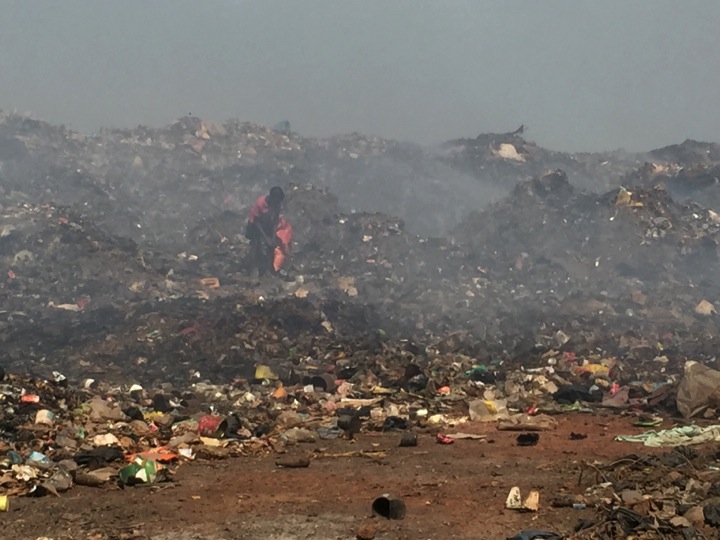
Resource circularity, while fundamental for reducing environmental impacts, does not eliminate the generation of waste. Even in circular systems, residual materials and by-products inevitably remain, making it essential to study and implement effective waste management strategies alongside circular economy practices. The course will provide you with the theoretical and practical tools to tackle the challenges of waste management within a circular economy context, allowing you to understand both existing strategies and emerging innovations. In case you are not able to access moodle, please contact the professor mariacristina.lavagnolo@unipd.it
- Docente: Barbara Biondi
- Docente: Maria Cristina Lavagnolo
The course aims at developing the following competencies and abilities:
•To understand the economic nature of environmental problems
•To analyse the relation between natural resources and economics
•To understand the rationale of governmental action
•To critically assess the potential advantages and disadvantages of alternative policy tools which might help to sustain a ‘circular economy’
Main Topics:
•An overview on sustainability and circular economy
•The relation between the economy and the environment
•The economic functions of the environment
•The material balance, IPAT identity, EKC curve
•Natural resources and the circular economy: optimal management of renewable and non-renewable natural resources
•The roots of environmental problems and the role of environmental politics
•Efficiency, optimality, public goods and externalities.
•Integrated assessment models (IAMs): climate and economy models.
•Microeconomic modelling for the energy and the environment
•To understand the economic nature of environmental problems
•To analyse the relation between natural resources and economics
•To understand the rationale of governmental action
•To critically assess the potential advantages and disadvantages of alternative policy tools which might help to sustain a ‘circular economy’
Main Topics:
•An overview on sustainability and circular economy
•The relation between the economy and the environment
•The economic functions of the environment
•The material balance, IPAT identity, EKC curve
•Natural resources and the circular economy: optimal management of renewable and non-renewable natural resources
•The roots of environmental problems and the role of environmental politics
•Efficiency, optimality, public goods and externalities.
•Integrated assessment models (IAMs): climate and economy models.
•Microeconomic modelling for the energy and the environment
- Docente: Marta Castellini
- Docente: Mauro Carraro
- Docente: Alessandra Lorenzetti
- Docente: Daniele Rosa-Gastaldo
- Docente: Francesco Avanzini
- Docente: Agostino Migliore